There is an old instinct in cooking to protect exceptional food by sealing it from air. Across Europe, cured meats were packed beneath rendered fat, submerged in lard, or coated to slow oxidation and moisture loss during maturation. In Italy, traditional salumi were protected with fat and wax-like coatings. In Nordic hunting culture, game was occasionally sealed against oxygen during cold storage. The exact lineage is difficult to trace — much of it exists as fragmented regional practice rather than documented culinary doctrine. What is clear is that the idea of isolating meat from oxygen while allowing internal maturation to continue is not new.
What is relatively new is the use of purified beeswax as a controlled aging medium for game cookery, and the reasons for doing it are specific enough to be worth explaining carefully.
Historically, beeswax was simply too expensive to justify using at scale for meat preservation. Wax belonged to candles, monasteries, medicine, and luxury trade. Only recently, with modern sourcing and the rise of experimental aging techniques, has it become viable as a culinary medium rather than a preservation necessity.
The reason we use it comes down to a specific problem with venison. Venison is lean — far leaner than beef, with very little intramuscular fat, particularly in the loin. In conventional aging environments, that leanness becomes a liability. Meat needs time for enzymatic activity to develop depth, but lean muscle dehydrates far faster than fatty muscle. The surface dries aggressively, trimming losses become substantial, and the flavor can move past where you want it before the interior processes have had time to do their work. You lose the meat to dryness before you win the flavor.
The goal here is not dry aging. The goal is precision over which processes we allow to happen and which we prevent.
What we are trying to achieve is specific: the intensification of umami and savoriness, the development of forest-floor depth and complexity, the rounding of iron notes that can make venison aggressive. What we are trying to prevent is equally specific: excessive dehydration, the off flavors that come from over-oxidation, the gamey harshness that emerges when lean game ages too fast in open air. Wax gives us the ability to extend the process to exactly where we want it while blocking what we do not want.
By encapsulating the loin in beeswax, moisture loss slows dramatically. Oxygen exposure becomes heavily restricted. The enzymes inside the meat — primarily calpains and cathepsins — continue breaking down structural proteins, reducing toughness and developing texture. Nucleotide breakdown increases savory depth through compounds associated with umami. Because oxygen exposure is reduced beneath the wax, lipid oxidation remains restrained, preventing the metallic or liver-like notes that emerge in exposed game aging. The processes we want continue. The processes we do not want are held back.
Temperature is equally critical. We hold the venison between 0–1.5°C with carefully controlled humidity. Too warm and microbial activity accelerates beyond control. Too cold and enzymatic activity slows almost entirely. This narrow window keeps maturation moving while keeping spoilage pressure extremely low. The wax also acts as a stabilising barrier against rapid environmental fluctuation — the loin sees consistent conditions throughout the aging period.
What the wax produces in the finished meat is unlike conventionally aged venison. The iron notes soften. Sweetness increases. Wild flavors become rounder and calmer. Texture becomes silkier and more relaxed. At three weeks the flavor deepens noticeably while retaining freshness. Around five to six weeks it reaches a density and complexity that would be impossible to achieve through conventional hanging without the meat deteriorating first. The wax is not preventing aging. It is directing it.
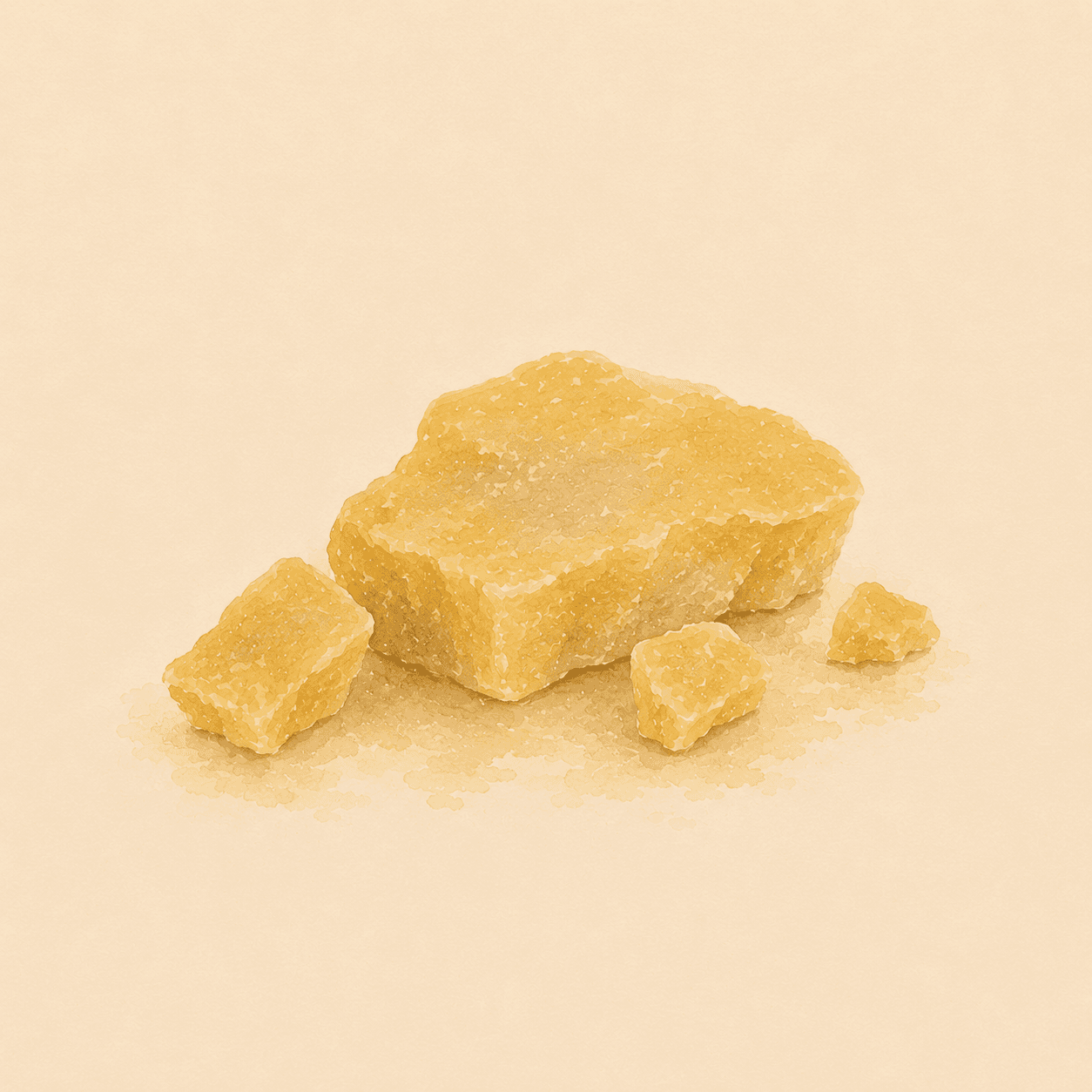
Wax-Aged Venison Loin
Beeswax-encapsulated loin aged for controlled enzymatic development without moisture loss.
Equipment: probe thermometer · aging fridge at 0–1.5°C · non-reactive wax vessel · wire rack
Ingredients
MethodPreparation
Trim the venison carefully. Remove silverskin, damaged edges, blood spots, and any oxidised surfaces while preserving as much clean muscle as possible. The quality of the initial trimming determines the quality of the aging.
Salt the venison lightly at approximately 1% by weight and allow it to rest uncovered overnight in refrigeration. This lightly seasons the interior while helping stabilise moisture distribution within the muscle.
The following day, dry the surface thoroughly. Any moisture trapped beneath the wax compromises adhesion.
Wax CoatingMelt the beeswax gently over low heat until fully liquid. Hold it between 70–85°C — excessive temperatures risk partially cooking the exterior proteins during coating. Some chefs blend a small amount of rendered venison fat into the wax. We occasionally do this because it slightly softens the wax structure and contributes subtle aromatic continuity between the coating and the meat.
Suspend or hold the venison and ladle the wax evenly over the surface until fully encapsulated. Multiple thin coats work better than one thick application. The goal is a complete oxygen barrier without excessive thickness. Allow the wax to solidify fully between coats.
AgingPlace the coated loin onto a rack inside a dedicated aging refrigerator held between 0–1.5°C with moderate humidity and minimal airflow. Unlike traditional dry aging, aggressive airflow is unnecessary here — the wax already regulates surface moisture loss.
Age for 21–45 days depending on the size of the loin and the flavor profile desired. At three weeks the flavor becomes noticeably deeper and sweeter while retaining freshness. Around five to six weeks the venison develops remarkable density and complexity without crossing into excessive game intensity.
FinishingCrack away the wax completely. Trim only minimally — because dehydration loss is dramatically reduced, wastage remains very low compared to conventional dry aging. Portion and temper the venison before cooking.
We prefer cooking over hardwood embers or extremely hard radiant heat. The goal is aggressive external caramelisation while preserving the interior at rare to medium-rare. Excessive cooking destroys much of the textural transformation achieved during aging.
Why It Works With the Croustade
The canapé built around this venison is designed to amplify the exact flavors created during wax aging rather than mask them.
The croustade provides brittle structure and toasted cereal notes. Its fried shell creates contrast against the softness of the aged venison while contributing nutty Maillard flavors that naturally reinforce the roasted character of the meat.
Blueberry raisin introduces concentrated dark fruit sweetness and acidity. During aging, venison develops subtle dried-fruit characteristics naturally through amino acid and oxidative changes. The blueberry intensifies that perception without overwhelming it.
Smoked chestnut cream adds warmth, sweetness, and fat. Venison is lean by nature, so the chestnut functions almost like a sauce hidden inside the bite. Smoke echoes the ember cooking while chestnut amplifies the woodland character already present in the meat.
Pickled mushroom contributes acidity and forest-floor aromatics. Mushrooms share many of the same glutamate-driven savory compounds associated with aged meat, which creates a natural resonance between the two.
Everything in the canapé is designed around one principle: extending the flavor already inside the venison rather than decorating it from the outside.
The wax aging is not a gimmick. It is simply another way of controlling oxygen, moisture, enzymatic activity, and time — in pursuit of a more complete expression of the animal itself.