In most kitchens I have worked in, the core and stem of a pineapple get discarded. The tough central tissue, the fibrous structural parts that most cooks remove before the fruit ever reaches a plate — straight in the bin, without much thought. I always wanted to find a proper use for them. What I arrived at became one of the better small preparations I keep — something I use selectively on tougher cuts with exceptional flavour, and one of those things that quietly does exactly what you need it to do.
The reason these parts are worth keeping is that they contain bromelain in its highest concentration — and bromelain belongs to the same category of chemistry that makes dry aging work, that makes koji aging so effective, that allows fermented dairy to modify texture and flavour over time. It is a protease: an enzyme that breaks down protein. The same fundamental mechanism, occurring here through an entirely different source.
What we do with it is straightforward in concept and precise in execution. We extract it cold, concentrate it without heat, and hold it frozen. The result is a preparation that takes something almost universally discarded and turns it into one of the more quietly powerful things in the larder — something that achieves in forty minutes what weeks of aging accomplish in a cold room, with enough control that nobody ever identifies pineapple in the finished dish. Just meat that feels unusually generous to eat.
Most concentration methods in cooking rely on evaporation. Stocks are reduced. Sauces are simmered. Juices are boiled down. But bromelain changes the equation because it remains biologically active only as long as its protein structure stays intact. Once sufficient heat is introduced, the enzyme denatures — its folded protein structure unravels and the catalytic sites responsible for proteolysis stop functioning. This begins happening surprisingly early. Even before visible simmering temperatures, bromelain activity starts declining rapidly, and by the time most liquids would traditionally be reduced for concentration, much of the enzymatic activity would already be compromised. Heat cannot be the mechanism. Cold has to become the mechanism instead.
What makes freezing particularly useful is that it does more than preserve the enzyme — it actively assists extraction. When water freezes, it expands by roughly nine percent. Inside plant tissue, this creates sharp crystalline structures capable of rupturing cellular walls mechanically, liberating bromelain that would otherwise remain trapped within fibrous pineapple tissue. The extraction happens through physical destruction rather than thermal processing, and because the process occurs entirely below damaging temperatures, the enzyme remains substantially intact throughout.
The second freezing stage then performs concentration. As the liquid partially freezes, pure water crystallizes first while sugars, acids, minerals, aromatics, and bromelain remain concentrated within the still-liquid fraction. Removing the ice effectively removes water without exposing the extract to heat at all. The result is concentration without cooking — the flavour remains fresher, the aromatics remain brighter, and most importantly, the enzyme remains active.
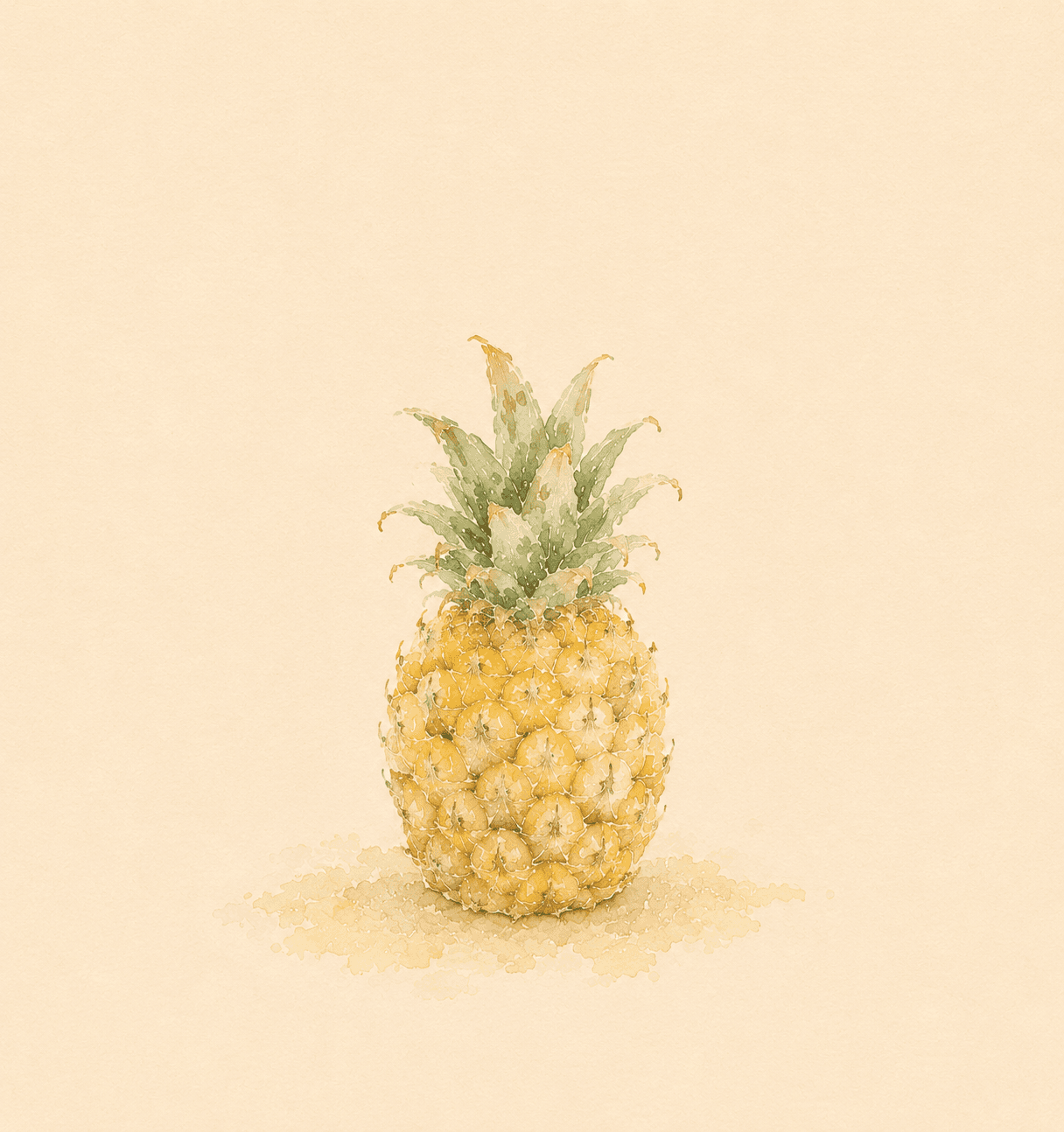
Pine Brine
Cryo-Concentrated Bromelain Extract
Makes approximately 150–200 ml from 1 kg pineapple cores and stems
Ingredients
Equipment: blender, fine chinois or mesh sieve, nut milk bag or muslin, non-reactive shallow container, freezer at −18°C.
MethodActivated Solution
Combine the filtered water and sodium metabisulfite directly in the blender. Add the pineapple cores and stems, begin blending slowly before increasing to full speed until a coarse slurry forms.
The sodium metabisulfite is optional, but we include it. Bromelain degrades quickly once extracted — oxidation and microbial activity begin reducing enzymatic potency almost immediately after extraction. Metabisulfite suppresses both, preserving the enzyme throughout the process and into storage. The practical difference is significant: preparations made with it retain approximately 250% more enzymatic activity than those made without. At these concentrations it is functioning as process control, not flavour.
First Freeze — Cryo-ExtractionTransfer the slurry to a shallow non-reactive container and freeze solid for 24 hours at −18°C. As the mixture freezes, expanding ice crystals rupture the pineapple tissue internally, releasing bromelain and intracellular liquid that would otherwise remain trapped. Once frozen completely, thaw slowly overnight under refrigeration or at room temperature for several hours.
Suspend the thawed slurry in muslin or a nut milk bag over a chinois and allow gravity to strain the liquid naturally. Avoid pressing aggressively — pressure introduces bitterness, excess pulp, and unwanted particulate matter while reducing clarity.
Second Freeze — ConcentrationReturn the strained liquid to the freezer. As freezing begins, pure water crystallizes first while sugars, acids, aromatics, and bromelain remain concentrated within the still-liquid portion. The key moment comes just before the ice turns fully clear — at that stage the remaining liquid contains most of the enzymatic concentration while much of the water has separated as ice. Carefully remove the concentrated liquid and discard the ice. Repeat once more for a stronger preparation. No heat is ever applied. The enzyme remains active throughout.
Storage and Safety
The extract will hold refrigerated for approximately three days or frozen for up to three months. Gloves are recommended during prolonged handling — concentrated bromelain can irritate skin in some individuals.
We avoid dehydrating this preparation into powder entirely; airborne bromelain is a respiratory irritant and potential allergen. Liquid extract is safer, cleaner, and easier to control.
Over Fire
Fire cooking creates a particular structural problem. High heat causes muscle fibres to contract aggressively and rapidly — the hotter and drier the cooking environment, the more tightly the proteins seize. This is part of what creates the remarkable crust and concentrated flavour associated with charcoal, embers, and wood fire, but it also increases the risk of toughness, particularly in heavily worked muscles. Cuts like bavette and oyster blade sit directly in this tension. They possess extraordinary flavour because they are structurally active muscles, but that same muscular density can become resistant very quickly over hard fire.
A careful bromelain treatment slightly relaxes part of the internal connective resistance before the meat ever touches heat. When the muscle contracts during searing, there is simply less structural tension remaining inside it. The meat still behaves like a proper muscular cut — it chars correctly, slices correctly, retains chew — but the resistance softens slightly, allowing aggressive fire cooking while preserving succulence more effectively after resting. Done correctly, nobody identifies pineapple. They simply experience meat that feels unusually generous to eat over fire.
We generally find forty minutes to be the ideal treatment window at approximately 1% extract relative to the weight of the meat. Prolonged exposure becomes destructive rapidly. Bromelain does not understand restraint — it continues breaking down structure until texture collapses entirely. The goal is not softness but reduced resistance. At the correct level the meat still feels muscular and coherent. It simply yields more easily.
Notes
Nearly every traditional tenderization method works through some form of protein degradation. Dry aging uses endogenous enzymes already present within the muscle. Koji introduces fungal enzymes. Papaya contains papain. Figs contain ficin. Fermented dairy partially modifies proteins both enzymatically and chemically. Different systems, same direction: the controlled breakdown of muscle structure.
The mistake is thinking tenderness alone is desirable. Perfect tenderness without structure feels artificial very quickly. The pleasure of meat comes partly from resistance — the feeling that muscle still exists beneath the knife and the teeth. What we are trying to achieve instead is relaxation — not destruction, not softness, not dissolution. Just slightly less resistance between the knife and the diner.