Native Hearth, Part II
Native New Zealand Woods and the Hearth Base
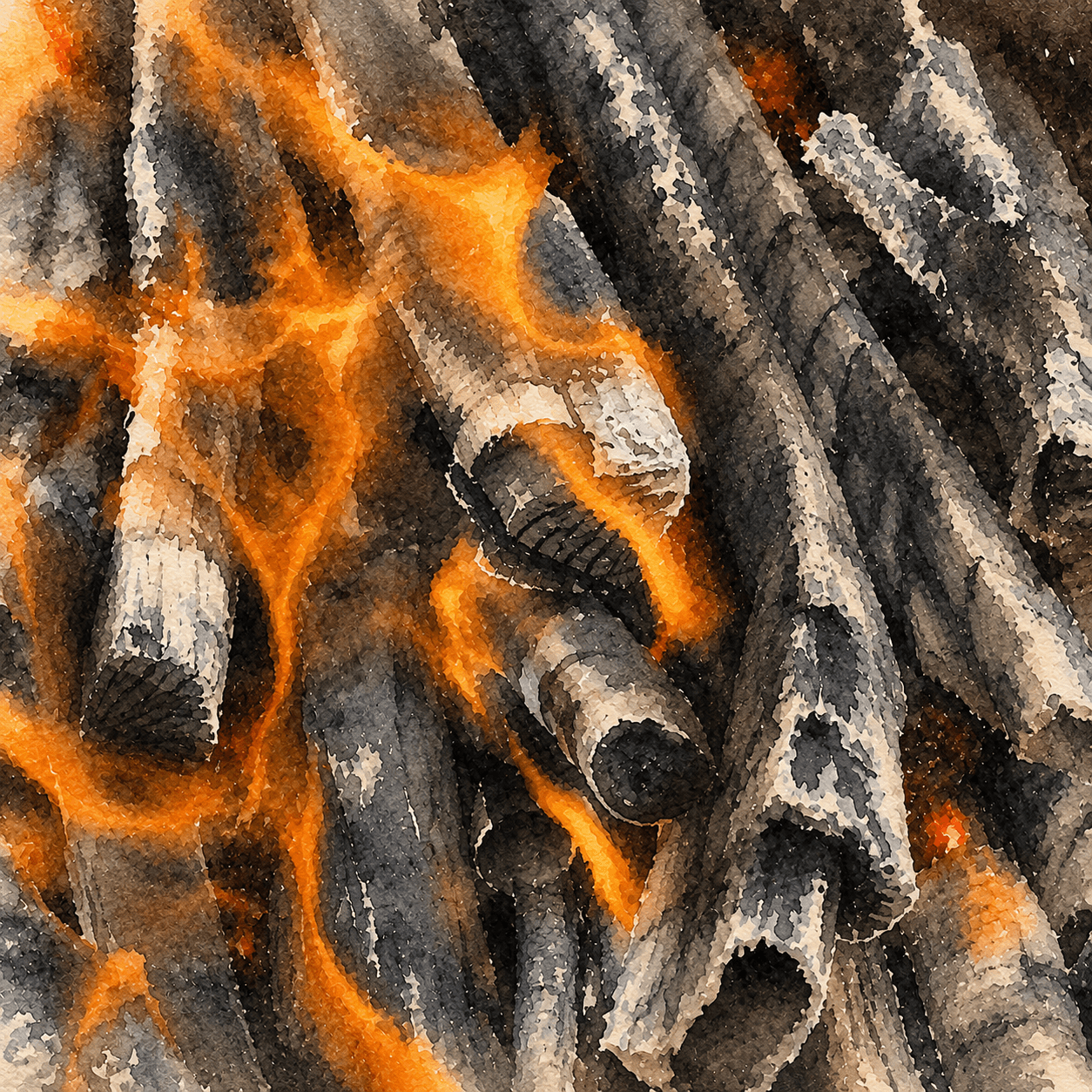
The New Zealand hearth begins with mānuka and kānuka. The mistake is treating them as local substitutes for imported barbecue woods rather than understanding them as part of a complete vocabulary of their own.
Mānuka deserves its reputation. It is dense, hot-burning, and deeply associated with local fire cooking, including hāngī. Its smoke is assertive: herbal, resinous, earthy, and unmistakably New Zealand. It pairs powerfully with venison, lamb, beef, duck, and oily fish with enough fat to carry it — king salmon, kahawai, trevally. It can easily overpower delicate poultry or lean white fish, so restraint is essential. Used well, especially over a stable oak base or within a controlled ember bed, mānuka gives depth and identity that imported woods cannot replicate. Used heavily or carelessly, it quickly becomes dense and bitter.
Mānuka charcoal also has value. It delivers high heat, low ash, and consistency while retaining some of the same aromatic character in a more controllable form. It lacks the full volatile range of split wood but excels where steady heat matters more than layered smoke.
Kānuka is closely related but meaningfully different. Where mānuka is heavier and more forceful, kānuka is cleaner, sweeter, and more flexible. It works beautifully with fish, vegetables, poultry, and lighter meats when native character is wanted without full intensity. Though often sold together as "tea tree," the two should not be treated as interchangeable.
Pōhutukawa belongs in the conversation, but with care. When properly seasoned it forms a dense, long-lasting coal bed with rounder smoke than mānuka: sweet, smoky, and slightly peppery. It is versatile across red meat, oily fish, and more delicate proteins. The issue is provenance. Use it only when legally, cleanly, and responsibly sourced. In professional kitchens, know your supplier and refuse casual or uncertain material.
Pūriri is worth naming when cleanly available. It sits in the same practical category as the other dense natives — good coals, medium smoke — without mānuka's intensity or pōhutukawa's distinctiveness. Reliable when well seasoned.
Rewarewa appears through some suppliers and blends. Treat it as a secondary native wood: useful for blending and finishing smoke rather than as a foundational fuel until more extensive testing confirms its behaviour.
Oak is the control wood. It burns slowly, forms a deep, stable ember bed, and produces moderate, even smoke that supports rather than dominates. For long roasting, sustained grilling, and multi-course services, oak is often the most reliable base. It solves a practical problem in New Zealand cooking: native woods can be assertive, fruitwoods seasonal. Oak provides the steady platform that lets everything else be used with precision.
The New Zealand fire conversation should remain local. Mānuka, kānuka, pōhutukawa, pūriri, rewarewa, orchard fruitwoods, and oak together form a complete hearth system without needing hickory or mesquite for validation.