Duck Feuilletage
Burnt Mandarin & Smoked Tea
It would be novel to pretend that creating a duck-fat feuilletage is somehow a modern invention. Across Southwest France, duck and goose fat have long been treated as everyday cooking fats rather than luxury ingredients, while in Nanjing — a city deeply associated with duck cookery for centuries — duck-fat shaobing developed from the same fundamental logic: using rendered duck fat to create tenderness, fragrance, and crispness within layered doughs. The broader lineage of shaobing-style breads may stretch back more than a thousand years through earlier Chinese flatbread traditions.
This version is simply our interpretation of those ideas using the ingredients and sensibilities available to us.
Smoked tea in bread and pastry is another technique that feels strangely forgotten despite being remarkably effective. In small amounts, smoked tea contributes less obvious "tea flavor" and more structural dryness: it sharpens richness, lengthens the finish, and introduces a subtle aromatic bitterness that prevents laminated doughs from becoming overly heavy or buttery. Used carefully, it behaves more like seasoning than flavoring, giving the pastry greater definition and clarity without making itself immediately identifiable.
Bitterness itself is often treated cautiously in modern cooking, as though it were something inherently unpleasant to be removed or hidden. In reality, controlled bitterness is one of the most effective tools for increasing complexity, lengthening flavor, and preventing richness from becoming monotonous. Used properly, bitterness sharpens sweetness, clarifies fat, and creates contrast in the same way acidity or salt does. Here, the bitterness of burnt mandarin and smoked tea is not intended to dominate the pastry, but to quietly increase the perception of depth, aroma, and savoriness throughout the finish.
The result is not overtly rich or obviously flavored, but light, savory, fragrant, and deeply layered. Duck fat provides warmth and subtle roast depth. Smoked tea dries and sharpens the finish. Burnt mandarin lifts the pastry with bitterness and citrus perfume.
The finished loaves are intended to be torn apart at the table and used to absorb duck jus or roasting juices while remaining delicate enough to continue eating throughout the course.
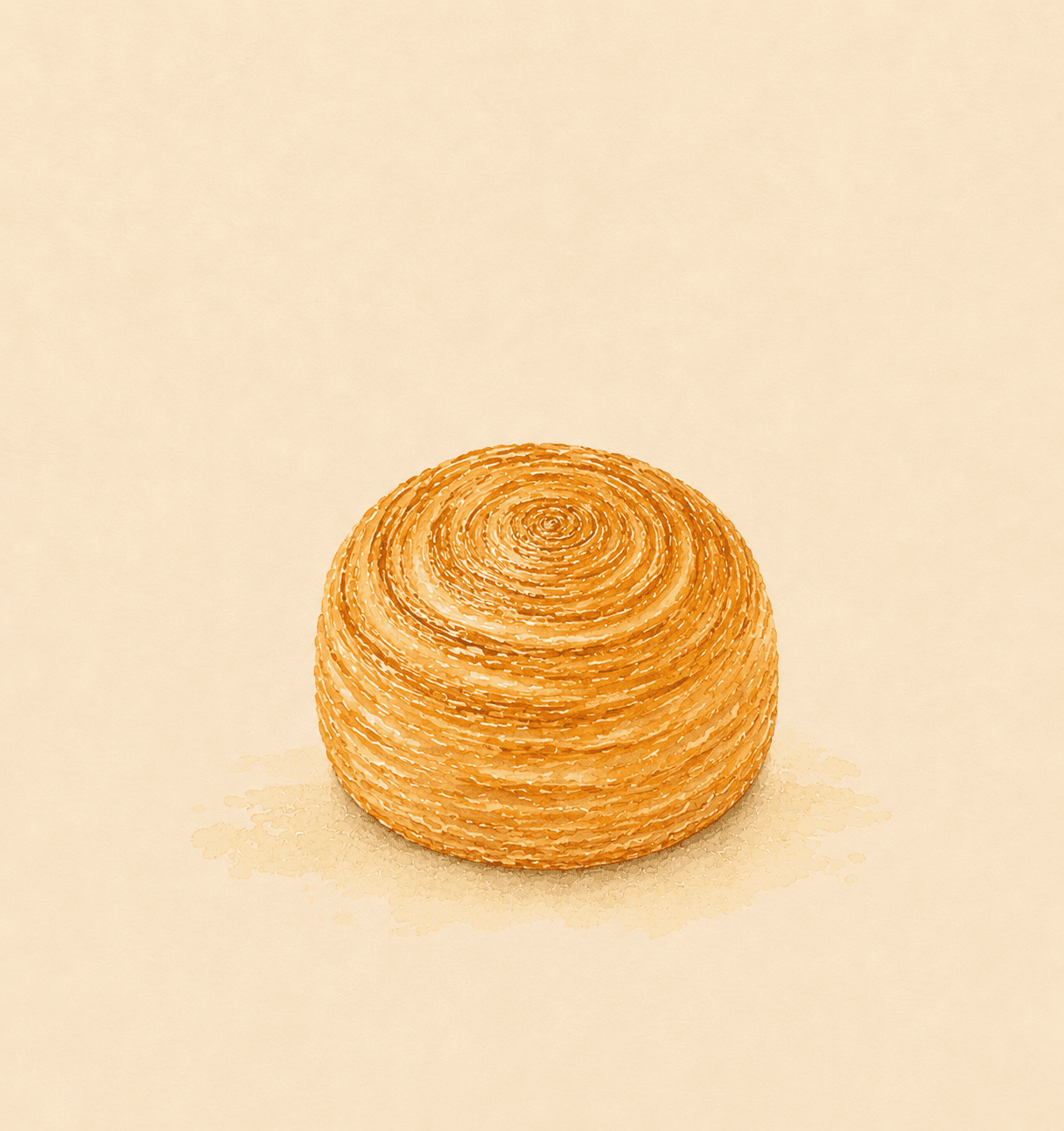
The ideal result should have:
- thin crisp laminated layers,
- a feather-light shreddable interior,
- restrained richness,
- and a long savory finish.
Nothing should taste individually identifiable. The pastry should simply feel complete.
Duck Feuilletage
Duck fat, burnt mandarin, and smoked tea in a laminated pastry designed to accompany duck.
Makes 8 small loaves (80–90 g each) · mold approx. 7.5 cm × 5 cm
IngredientsPreferment
MethodPreferment
Mix the flour, milk, and yeast into a stiff dough until homogeneous. Cover and ferment for 2–3 hours at room temperature, or overnight under refrigeration. The sponge should smell lightly sweet and fermented, not sour.
Burnt Mandarin Peel PowderRemove the mandarin peel in broad strips, taking as little white pith as possible. Char lightly until aromatic and blackened in places, then dry at low temperature until crisp. Grind to a fine powder. The aroma should resemble citrus incense rather than fresh zest.
Lamination BlockMix the cultured butter and refined duck fat until completely homogeneous. Shape into a square approximately 1 cm thick between sheets of parchment. Refrigerate until cold but pliable. The block should bend cleanly without cracking or feeling greasy.
Final DoughCombine the flours, sugar, salt, yeast, milk, eggs, preferment, smoked tea, and burnt mandarin powder in the bowl of a stand mixer. Mix on low speed until shaggy, then increase to medium speed and begin developing the gluten. Add the softened butter and browned duck fat gradually, allowing each addition to incorporate before adding the next.
Continue mixing until the dough is smooth, glossy, elastic, and able to stretch into a thin translucent membrane. The dough should feel stronger and slightly tighter than standard brioche.
Target dough temperature: 22–24°C. Flatten the dough into a rectangle approximately 3 cm thick, wrap thoroughly, and refrigerate overnight.
LaminationRoll the chilled dough slightly larger than the lamination block and enclose the block fully. Keep the edges sharp, the thickness even, and the bench flour minimal.
Perform one double fold, chill for 30 minutes, then perform one single fold. Chill again for 30 minutes, then perform one final single fold. After the final fold, refrigerate for at least 1 hour before shaping.
If the dough begins to soften, smear, or feel oily at any stage, stop and refrigerate before continuing.
ShapingRoll the dough to approximately 4 mm thickness. Cut into strips and loosely coil or layer into lightly buttered molds. Scale each loaf at 80–90 g. The shaping should preserve visible layering and gentle tension without compressing the dough.
ProofingProof at 22–24°C until visibly expanded, lightly trembling, and aerated — usually 3–5 hours depending on room temperature. For a simple home method, place the shaped loaves inside a large plastic storage container with a cup of warm water beside them and close the lid. This creates gentle warmth and humidity without overheating the laminate.
Egg WashBlend the egg yolks, cream, and salt, then strain. Apply one thin coat before proofing and a second delicate coat immediately before baking.
BakingBake at 210°C static for 5–6 minutes, then reduce the oven to 175–180°C and continue baking for 14–18 minutes, or until the loaves are deep amber, crisp, and surprisingly light in weight.
Burnt Mandarin GlazeReduce the mandarin juice and duck stock gently until lightly syrupy. Whisk in the honey and butter off the heat. The glaze should be glossy, lightly savory, and only gently sweet — not a conventional pastry glaze.
FinishingImmediately after baking, brush the loaves lightly with the warm burnt mandarin glaze. Finish with a very fine grating of fresh mandarin zest. The citrus should lift the pastry rather than dominate it.
Service
Serve warm, ideally at an internal temperature of 32–38°C.
The pastry is designed to accompany duck and absorb sauce while remaining crisp and delicate externally. It should function almost like an ultra-refined sauce bread: light enough to continue eating, delicate enough to tear apart easily, and aromatic enough to contribute actively to the dish.
Final Notes
Duck fat melts earlier than butter and can weaken lamination if overused. The balance here is designed to preserve structure while giving warmth and savory depth.
The dough should never feel oily during lamination. If it does, refrigerate before continuing.
The final pastry should not taste overtly of duck, smoked tea, or mandarin. Ideally, it should taste integrated, fragrant, savory, and complete.