Don’t Make Miso Yet
What to Do With Your Miso Before You Make Your Own
Often when people get interested in miso, they immediately want to start making their own. I think that's a very good thing to do, but I also think people sometimes overlook how much you can learn just by working with misos that already exist.
A very good miso is not a finished product in the same way a stock or sauce isn't necessarily finished. It can still be infused, adjusted, stretched into something seasonal, or moved in an entirely different direction depending on what you add to it.
That's probably the easiest first step into understanding miso properly. You can start immediately, and you can begin learning how sweetness, salinity, fermentation, aroma, and texture all interact without waiting months or years for your own fermentation project to mature.
That's partly why I wanted to share this recipe.
This is our version of kinome miso, a traditional Japanese seasoned miso made with young sansho leaves. We make it when we have more kinome than we need for garnish, and we also adapt the same method with kawakawa when kinome isn't available.
Kinome are the young leaves of the sansho tree, the Japanese prickly ash. The prime window for picking them is late spring, when the plant breaks dormancy and pushes its first new growth. At this stage the leaves are pale to bright green — not dark and leathery — soft and pliable between the fingers, and approximately three centimetres in length. The flavour at this point is more mild than it becomes later in the season, with a gentle numbing sensation and less of the harder, more aggressive quality that develops as the leaves mature. The central vein is also less pronounced, which makes them easier to work with.
The flavour of kinome is very distinctive. It's citrusy, peppery, and slightly herbal, with a gentle numbing sensation similar to Sichuan pepper, although it tastes much greener and fresher. When the leaves are really fresh, the aroma is incredibly strong.
Kinome miso is traditionally used with things like tofu, mushrooms, grilled vegetables, and other simple preparations where the sweetness and richness of the white miso soften the sharper aromatic qualities of the leaf without covering them completely.
It's also very difficult to find in New Zealand. As far as I know, there's no real commercial supply here, although I've managed to get plants and leaves from Japanese chefs who grow it privately. It can grow in certain climate zones, including sheltered parts of Auckland, Nelson, and some Canterbury microclimates, but in the South Island especially it can be difficult.
We grow ours in pots indoors. Once the plant is established it's reasonably hardy, but getting it established properly is the harder part. When harvesting, we pinch two to four leaves from each growing tip rather than stripping the plant — the older leaves need to stay on to photosynthesise, and that way the plant keeps its best legs. When we have enough leaves for service, the best ones are usually kept fresh for garnish or finishing dishes. But when we have excess leaves, or leaves that need to be used quickly, we turn them into kinome miso instead so we can hold onto that part of the season a little longer.
We also alternate this recipe with kawakawa leaves when kinome isn't available. The flavour is obviously quite different, but kawakawa has a similar peppery aromatic quality that works in a very similar role within the miso. The quantities remain the same — adjust to taste depending on the strength of your leaves.
Kinome Miso
Made with young kinome leaves at their late-spring peak. Adapted equally well with kawakawa.
Makes approximately 180g
Ingredients
Method
First, place the kinome leaves into a strainer and pour boiling water over them. This softens the leaves slightly, removes some of the harsher raw bitterness, and helps fix the bright green colour while still preserving the fresh aromatic oils. Immediately transfer them to a bowl of iced water to stop the cooking and set the colour. Once cooled, spread them out and let them drain and dry properly.
After they're fully drained, use an extremely sharp knife — or a mortar and pestle if you have one — to mince the leaves as finely as possible.
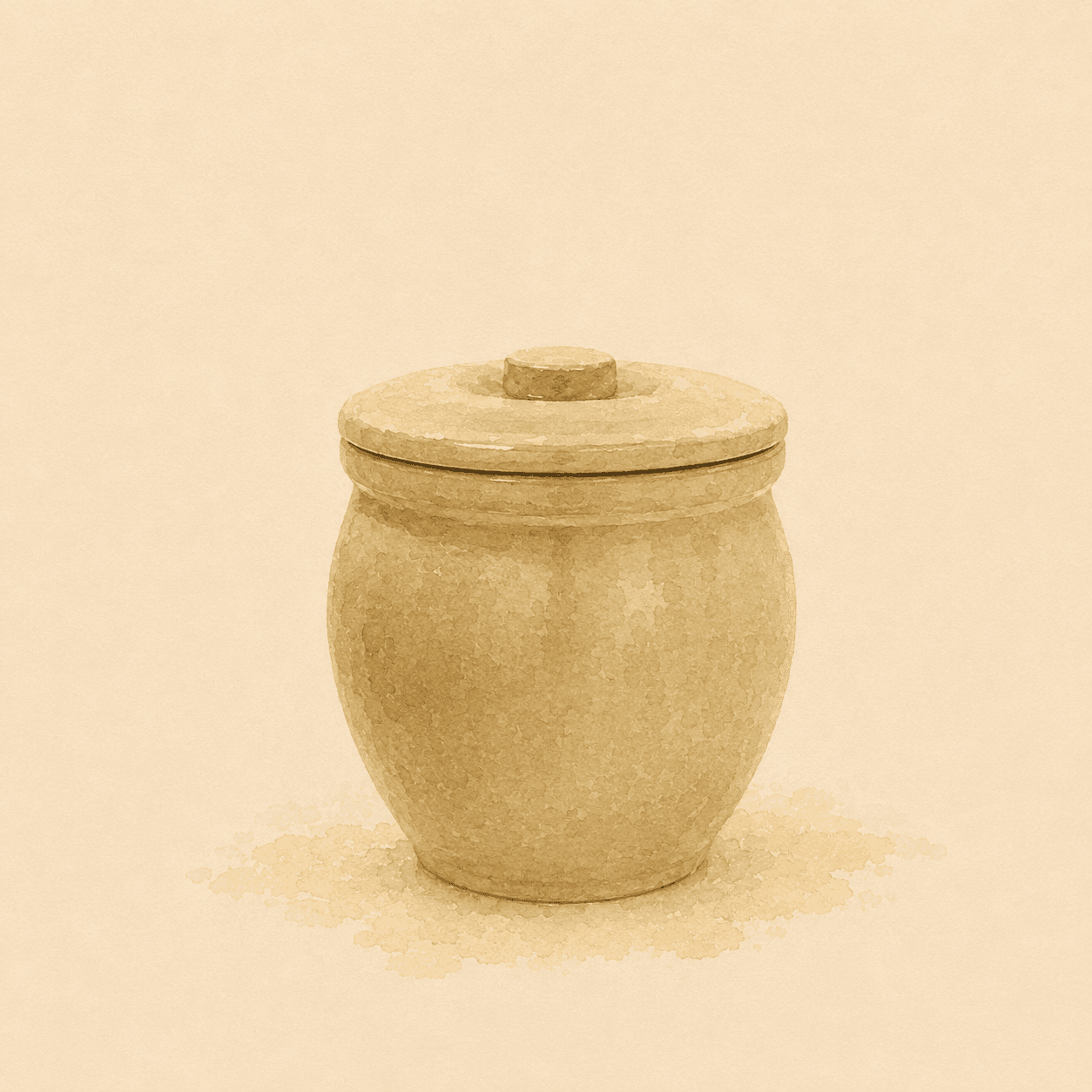
If you have a hearth, this works very well in a small stoneware pot near gentle heat. Otherwise, just use a small saucepan on the stove.
Combine the miso, honey, water, shoyu, and mirin in the pot and place it over very low, even heat. Bring it to a gentle simmer and cook for around two to three minutes, stirring consistently with a spatula until the mixture thickens slightly.
The kinome is added at the very end, after the pot comes off the heat. You don't want to cook the leaves directly because a lot of their fresh aromatic quality disappears very quickly once heated. The residual heat is enough to release the flavour without flattening it.
Once the kinome has been folded through, allow the miso to cool naturally before refrigeration or use. It keeps refrigerated for up to three to four weeks.
At SOYER
We use this with hapuka cooked over the hearth. We brush perilla leaves with the kinome miso and wrap them around the fish before cooking. The perilla and miso act as both seasoning and protection — they shield the flesh from the harsher parts of the fire while slowly perfuming it as it cooks.