People often call croustades Swedish, and Sweden did help make the crisp canapé shell widely familiar — the mould-fried tradition became genuinely popular there across the twentieth century. But popularising something is not the same as inventing it. The word is French, and the earliest French references describe a baked filled pastry rather than a fried shell. The mould-frying technique itself appears in Scappi's Opera dell'arte del cucinare in 1570, and the fried pastry traditions behind it stretch further still through Italian and Syrian cooking long before that.
What interests me about this is not the question of where the croustade belongs — food has never respected borders well enough for that to be a useful question. What interests me is how a technique that travels across centuries ends up being shaped almost entirely by what surrounds it. The mould stays roughly the same. What makes a croustade individual is what you choose to fry it in, and what you put inside.
Here, the decision starts with cider. Not the more common beer-based batter, but dry apple cider. The reasoning is straightforward: this shell exists to hold wax-aged venison, smoked chestnut cream, and juniper oil. Orchard acidity and light fermentation sit naturally beside game, smoke, and autumn in a way that beer bitterness doesn't. The cider note recedes almost entirely in the finished shell, but it leaves something that makes the pairing feel inevitable rather than assembled.
This is the first of two preparations. The croustade is a vessel — the recipe works with almost anything the season makes available, and it is worth understanding on those terms rather than only as the base for one specific canapé. The second part covers the filling we use here: venison finished in beeswax, which is another technique that translates easily into your own kitchen and your own preparations. Both are things we make regularly. Both are worth having in the larder.
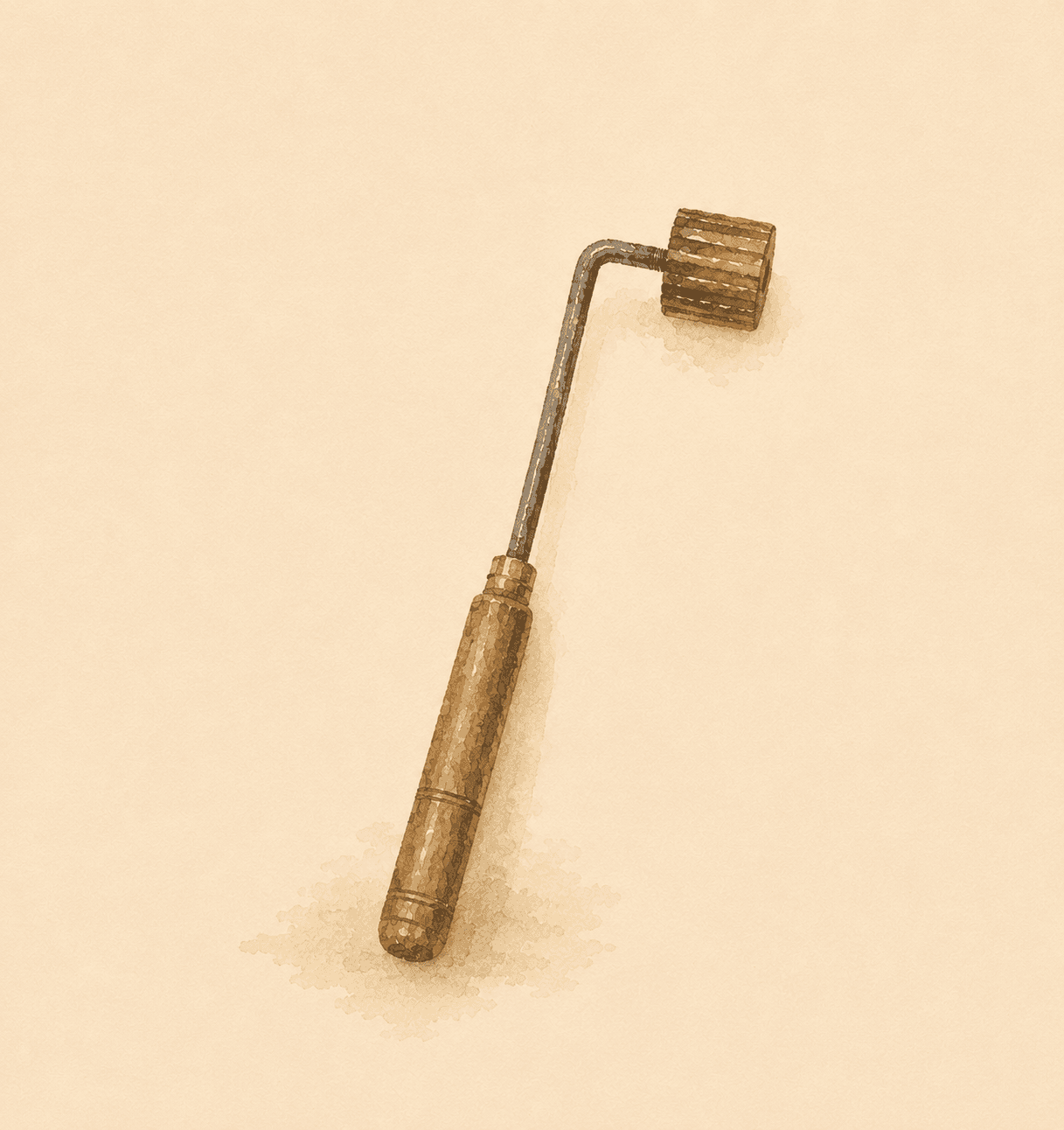
Croustade Batter
Dry cider batter for a mould-fried canapé shell designed to hold game, smoke, and autumn.
Yield: approximately 500 g
Ingredients
Method
Combine the water, cider, salt, and sugar and whisk until dissolved. Add the flour gradually while blending continuously until completely smooth with no visible lumps. Rest for 5 minutes to allow the flour to hydrate.
Whisk the eggs separately until fluid and uniform, then slowly incorporate them into the batter. Add the neutral oil and continue mixing until glossy and lightly elastic. The finished batter should resemble a thin crêpe batter rather than a heavy fritter mixture.
Strain through a fine sieve into a container and refrigerate overnight. This resting period relaxes the batter, improves adhesion to the mould, and produces a finer, more delicate shell.
Before cooking, stir gently to redistribute any settled starch. Heat a croustade iron in neutral frying oil at 180–185°C until thoroughly hot. Lift the iron from the oil, shake away excess fat, then dip into the batter without submerging the top edge. Immediately return the iron to the oil and fry until the shell firms, colours, and naturally releases from the mould.
Continue frying until deeply crisp and evenly golden. Transfer to a rack and cool briefly before service.
Notes
The 14% protein flour matters more than it might appear. At this hydration, the extra gluten strength improves release from the mould, reduces collapse, and allows the shell to stay extremely thin without becoming fragile or bready. What you are looking for in the finished croustade is not crunch but brittleness — a surface that fractures cleanly the moment teeth meet it rather than offering any resistance.
Fry close to service, ideally within thirty minutes. Hold briefly at 45–50°C to dry and stabilise the shell, then fill at the last possible moment. Humidity and residual steam are the enemies of the glass-like quality that makes the bite work.