Before Fire, Part I
The Principles of Hearth Wood
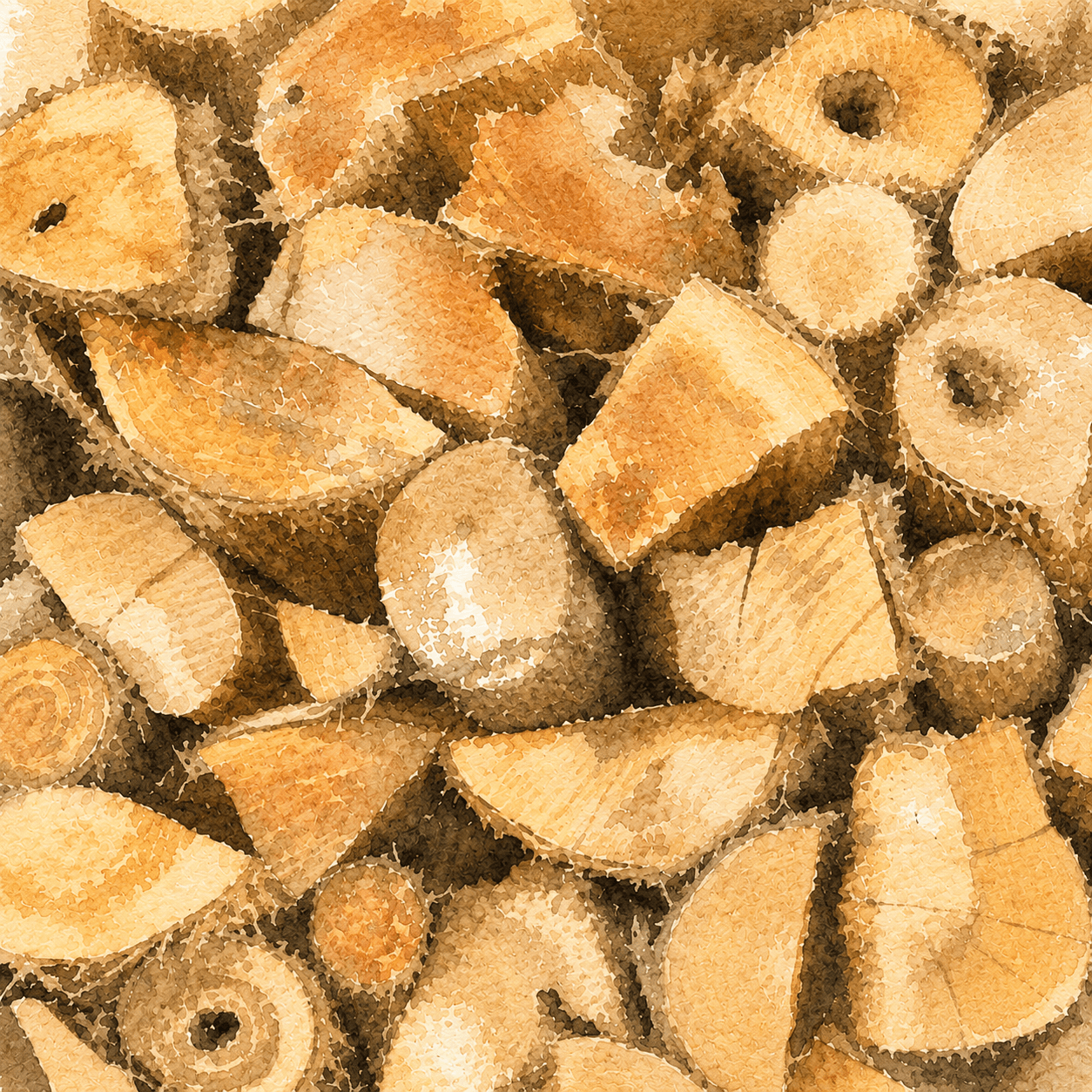
Cooking over wood sits at the center of much of what we do. One of the most common questions we are asked is how to cook properly with New Zealand wood: what to choose, what to avoid, and how to understand the difference between a fire that merely burns and a fire that is worth cooking over.
Wood-fire cooking has universal principles, but it is not universal in practice. Having cooked over wood in both the United States and Australia, it becomes clear very quickly that the fuel itself changes everything. Climate, species, density, seasoning, oil content, and ember behaviour all affect how a fire burns, how it smokes, how it holds heat, and how it flavours food.
That distinction matters in New Zealand. Much of the available advice comes from American barbecue, Australian live-fire cooking, or general fire-cooking traditions written around different woods and different conditions. Those references are useful, but they are not enough. New Zealand woods deserve their own guidance.
Because it is such a large subject, this has been broken into a three-part series for people who genuinely want to better understand cooking with wood in New Zealand and the principles behind it.
The first question is not which species to use. The first question is whether the wood is clean, dry, untreated, correctly split, correctly stored, and burning well. Species only becomes meaningful once those fundamentals are controlled. Wet mānuka is worse than dry apple. Dirty pōhutukawa is worse than clean oak. A badly managed fire makes every wood taste like the same mistake: sour smoke, soot, and bitterness.
For hearth cooking, wood has two jobs. It must create heat, and it may also create flavour. These are not the same task. A good hearth needs a base fuel: something dense enough to form a steady ember bed, predictable enough to manage through a long service, and clean enough to cook over without fighting the fire. Flavour woods can then be added with intention. The best fire is rarely built from one romantic species. It is built from a controlled foundation and carefully chosen accents.
The size of the split matters as much as the species. Large logs are for building the fire before service. Medium splits maintain it. Small splits and chunks are for adjustment, finishing smoke, and quick changes during service. A cold, damp log dropped directly onto a mature coal bed cools the fire and shocks the ember bed before it contributes. Warm splits beside the hearth before feeding them in — they catch faster, burn cleaner, and disturb the coals less.
A proper hearth is built in layers. Establish the base first. Let the flame do its work, then cook over the heat that remains. Mature coals are where most serious fire cooking happens. Flame creates movement, ignition, and spectacle; embers create steady, usable heat. The cook's work is not to chase flame, but to build a fire that becomes useful after the flame has passed.
Moisture is the hidden variable. For hearth cooking, wood at fifteen to twenty percent moisture is the practical target. Above that, the fire wastes energy driving off water instead of producing clean heat. It hisses, steams, and produces white smoke that clings to food. Below that, the wood burns aggressively and requires closer management. Dense woods such as mānuka and kānuka need particular attention: they burn intensely once dry but can take longer to season properly.
A moisture meter removes guesswork. Test the split face, not the bark. If readings are high, stack the wood and wait. Without a meter, knock two pieces together: dry wood gives a hard, clear ring; green wood gives a dull thud. Look for small end-checks, loosening bark, and a lighter feel than the size suggests. Most importantly, the wood should smell clean before it is lit. Sour, mouldy, stale, chemical, or damp odours will transfer to the food.
Bark needs judgment. A little is unavoidable, but excess bark produces harsher, more bitter smoke — especially on heavy splits or poorly seasoned wood. For clean cooking, prefer well-prepared splits with minimal loose bark. Bark-heavy wood can still build initial heat before food is introduced, but it should not be treated as primary cooking fuel.
Smoke is the fastest diagnostic tool in live-fire cooking. Clean smoke is thin, pale, almost blue, and aromatic. White rolling smoke usually signals moisture or low combustion temperature. Black smoke means the fire is overloaded, oxygen-starved, contaminated, or smothered. The fix is the same in both cases: more airflow, less wood, better spacing, and time for recovery. Bad smoke is never neutral. It ends up in the food.
Wood is mostly cellulose, hemicellulose, and lignin. Cellulose and hemicellulose break down into sweeter, softer smoke compounds. Lignin produces the deeper aromatic phenols — guaiacol, syringol, vanillin — that give hardwood smoke its spice, warmth, and persistence. Dense woods such as mānuka and pōhutukawa produce stronger heat and more assertive smoke because of this structure. The chemistry is clear: the denser and more aromatic the wood, the more carefully it must be managed.
Combustion temperature matters. Wood heated too coolly smoulders and produces sour, acrid smoke. Wood burned too aggressively strips nuance and leaves harshness. The ideal zone is a clean, oxygen-fed fire with small active flame over a mature ember bed. A controlled flame above deep coals is almost always better than a roaring fire.
Smoke also has timing. It attaches most readily while the food surface is still cool, slightly moist, and rich in exposed fat. Once the exterior dries, browns, or sets, smoke absorption slows and the flavour becomes more surface-level. That is why early smoke must be clean. A dirty fire at the beginning of a cook does more damage than the same smoke later. The best smoke is applied deliberately, not continuously.
Avoid treated timber, painted wood, laminated material, demolition wood, MDF, plywood, particleboard, salt-contaminated driftwood, or anything with uncertain chemical history. For food cooking, also avoid pine, macrocarpa, Douglas fir, spruce, cedar, cypress, redwood, rimu, poplar, elm, eucalyptus, gum species, liquidambar, and other resinous woods. Some are fine for heating. None belong over food.
The aim is not to accumulate species. The aim is to build clean, stable, controllable heat and then decide deliberately what flavour the wood should contribute. Exceptional wood burned badly will always lose to ordinary wood managed well.